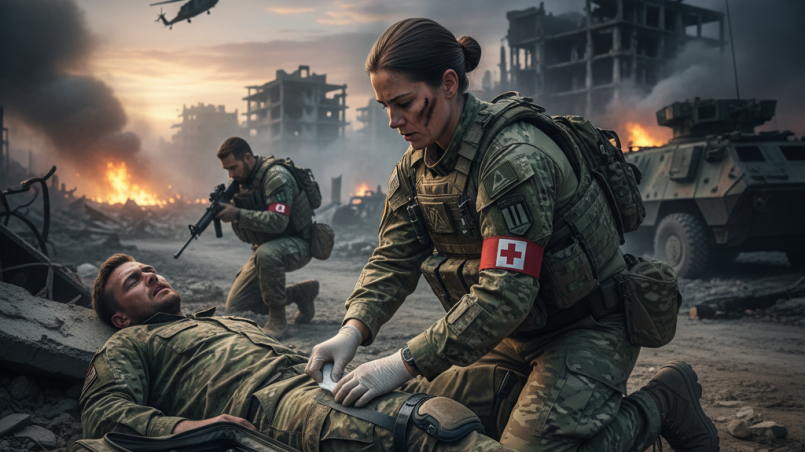
Warzones present some of the most extreme environments for trauma care. In these settings, healthcare providers are tasked with saving lives under constant threat, resource scarcity, and overwhelming patient volumes. Understanding trauma medicine in warzones is crucial for students interested in emergency medicine, military medicine, or humanitarian healthcare.
🩸 What Makes Trauma in Warzones Unique?
1. Mechanism of Injury
Unlike civilian trauma (mostly blunt trauma), combat trauma involves:
- Penetrating injuries (gunshot wounds, shrapnel)
- Blast injuries (from improvised explosive devices, or IEDs)
- Burns
- Polytrauma (multiple systems involved)
💡 Tip: Blast injuries often cause a combination of blunt, penetrating, and thermal trauma — always look beyond visible wounds.
2. The “Golden Hour” Under Fire
The Golden Hour concept—getting the patient definitive care within 60 minutes—is extremely difficult in warzones. Delays due to:
- Unsafe evacuation routes
- Limited transport (helicopters, ambulances)
- Ongoing combat
3. Resource-Limited Settings
Even with advanced field hospitals, supplies may be limited:
- No CT scans
- Limited blood products
- Few trained personnel
🩺 Practitioners often rely heavily on clinical skills, ultrasound (POCUS), and triage judgment.
🧰 Principles of Warzone Trauma Medicine
1. Triage
- Patients are categorized based on survivability and available resources.
- Often guided by the MPTT (Modified Physiological Triage Tool) or START triage system.
⚠️ Ethically and emotionally challenging: Some patients may be deemed unsalvageable due to lack of resources.
2. Damage Control Resuscitation (DCR)
- Combines damage control surgery with early use of blood products, permissive hypotension, and control of bleeding.
- 1:1:1 transfusion ratio (RBCs:plasma:platelets) is ideal, though not always available.
3. Damage Control Surgery (DCS)
- Life-saving, minimal surgery to stabilize the patient.
- Prioritizes stopping hemorrhage and preventing contamination.
- Definitive surgery is delayed until patient is stabilized.
💡 DCS is about doing what’s essential, not everything.
🧠 Psychological Trauma & PTSD
- Mental health issues are common in both patients and healthcare workers.
- Providers must be trained to recognize and manage acute stress reactions, PTSD, and combat fatigue.
- Access to mental health support may be very limited.
🛠️ Tools & Innovations Used in Warzone Medicine
| Tool/Method | Purpose |
|---|---|
| Tourniquets | Stop life-threatening extremity bleeds |
| POCUS (Portable Ultrasound) | FAST exams, cardiac tamponade, hemothorax |
| Hemostatic dressings | Control bleeding in junctional areas |
| Portable ventilators | Respiratory support in field hospitals |
| Telemedicine | Remote guidance from specialists |
| 3D-printed prosthetics | Low-cost limb replacements |
🌍 Humanitarian & Civilian Aspects
- Warzone trauma medicine is often delivered by NGOs (e.g. Médecins Sans Frontières), Red Cross, and military medical corps.
- Civilians (especially women and children) are increasingly affected in modern conflicts.
- Medical neutrality and ethics in war are core principles — treating all patients regardless of side.
🔭 Lessons for Medical Students
- Adaptability matters – You may need to think and act fast with limited tools.
- Know the basics – ABCDE, FAST exams, wound care, splinting, IV access.
- Understand field triage – It’s a different mindset than in-hospital care.
- Stay grounded in ethics – You may face difficult decisions under pressure.
🧠 Final Thought
Trauma medicine in warzones is about doing the most, for the most, with the least. It requires clinical skill, courage, ethical clarity, and emotional resilience. For medical students, it offers powerful lessons in what it means to practice medicine under fire — literally and figuratively.

